NetRisk™
Risk intelligence developed by PMA—delivering realistic schedule and cost risk analysis that helps owners and capital program leaders make confident, defensible decisions.
Why Traditional Risk Analysis Falls Short
Most risk tools simulate uncertainty—but not how projects truly behave in the field. Despite widespread risk analysis, only a fraction of construction programs finish on time and on budget. NetRisk was designed to close that gap.

Activities are scheduled on early dates, even when experience says they won’t start early.

Float consumption goes unmodeled, overstating confidence in completion forecasts.

Non-critical activities are treated as low risk when they routinely drive real delay.

Results appear precise but fail to reflect how projects actually execute.
Risk Analysis That Accounts for Float Use
NetRisk is the only Monte Carlo risk analysis tool that models how float is actually consumed during project execution—not just whether it exists.
Off-critical-path activities can start later to reflect resource leveling, progress pacing, or strategic sequencing—producing completion forecasts that reflect execution reality, not optimistic assumptions.
Outcome
More accurate forecasts.
Fewer late-stage surprises.
Variable and Un-Correlated Risk Impacts
Risks rarely behave identically across a program. NetRisk allows probability and impact to vary across activities—even when tied to the same risk event—producing credible models for:
- Multi-year programs
- Multi-site execution
- Phased capital investments
Outcome
Risk modeling that reflects
your program’s reality, not a theoretical average.
Automated Risk Sensitivity Analysis
NetRisk automatically re-runs simulations to isolate the true impact of each risk, presenting results in clear tornado charts that owners and project managers can act on immediately.
Outcome
You know which risks drive schedule and cost outcomes, so mitigation resources go where they matter most.
Integrated Schedule and Cost Risk—In One Model
NetRisk integrates cost and schedule uncertainty in a single probabilistic model, so both tell the same story when it reaches the boardroom or the lender.
- Import cost uncertainty directly from Excel
- Model time-dependent and time-independent cost impacts
- Analyze probabilistic cash flow
- Visualize cost/schedule scatter plots
Outcome
Stronger capital planning, more defensible contingency decisions, and reporting that holds up to scrutiny.
Built for Decision-Makers
PMA developed NetRisk to meet a gap that standard risk tools leave unfilled—analysis that reflects how projects actually use float, absorb delays, and respond to uncertainty. The result is risk intelligence owners and project managers can act on with confidence.
Defensible Forecasts for Capital Planning
NetRisk provides transparent, logic-based risk analysis that supports realistic contingency setting, executive reporting, and governance decisions. Results are quantitative, visual, and built to hold up where it counts.
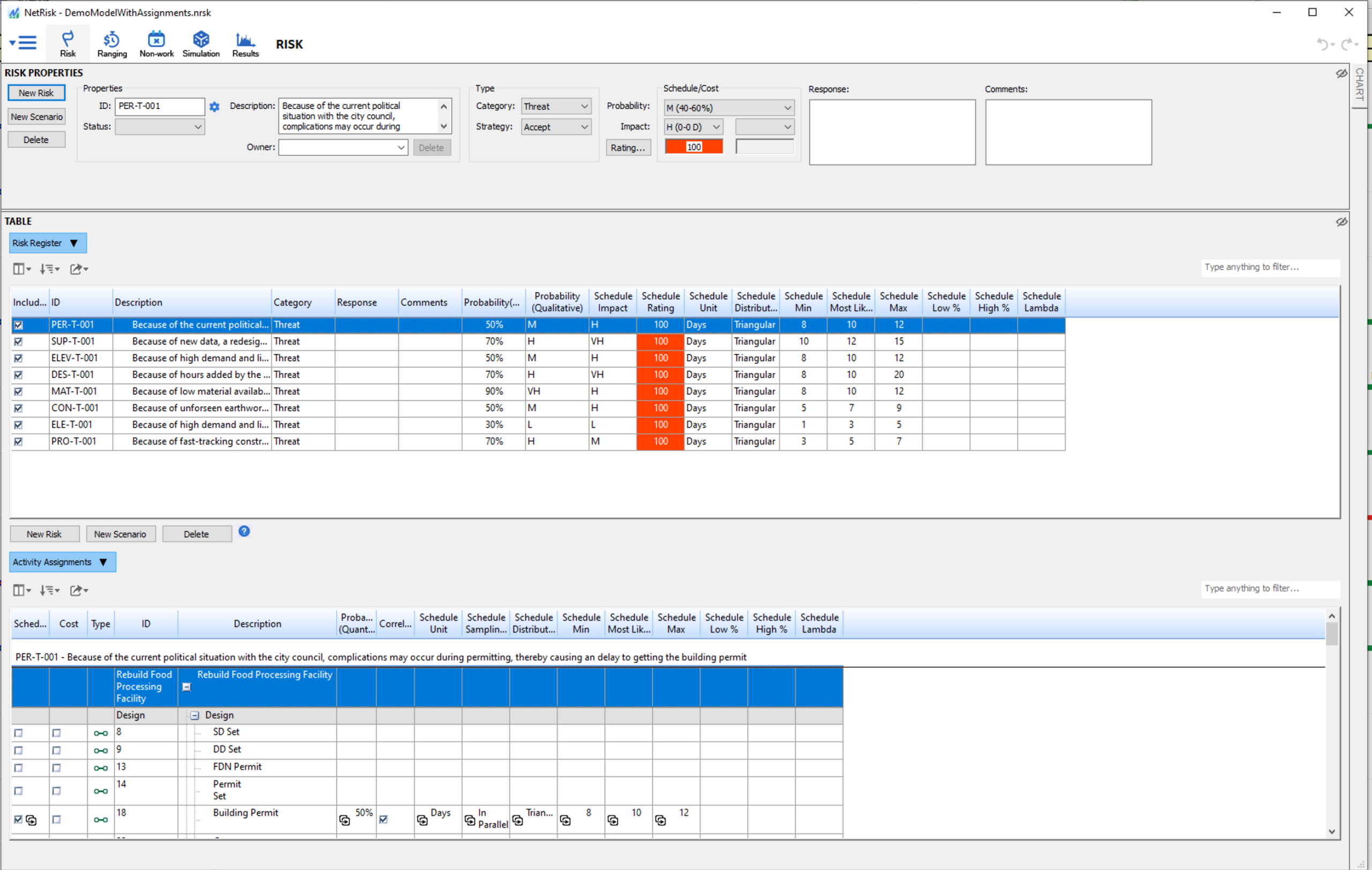
Plan with Confidence. Communicate with Clarity
Run multiple scenarios, validate recovery strategies, and quantify time contingency. NetRisk transforms uncertainty into structured insight that stakeholders can understand.
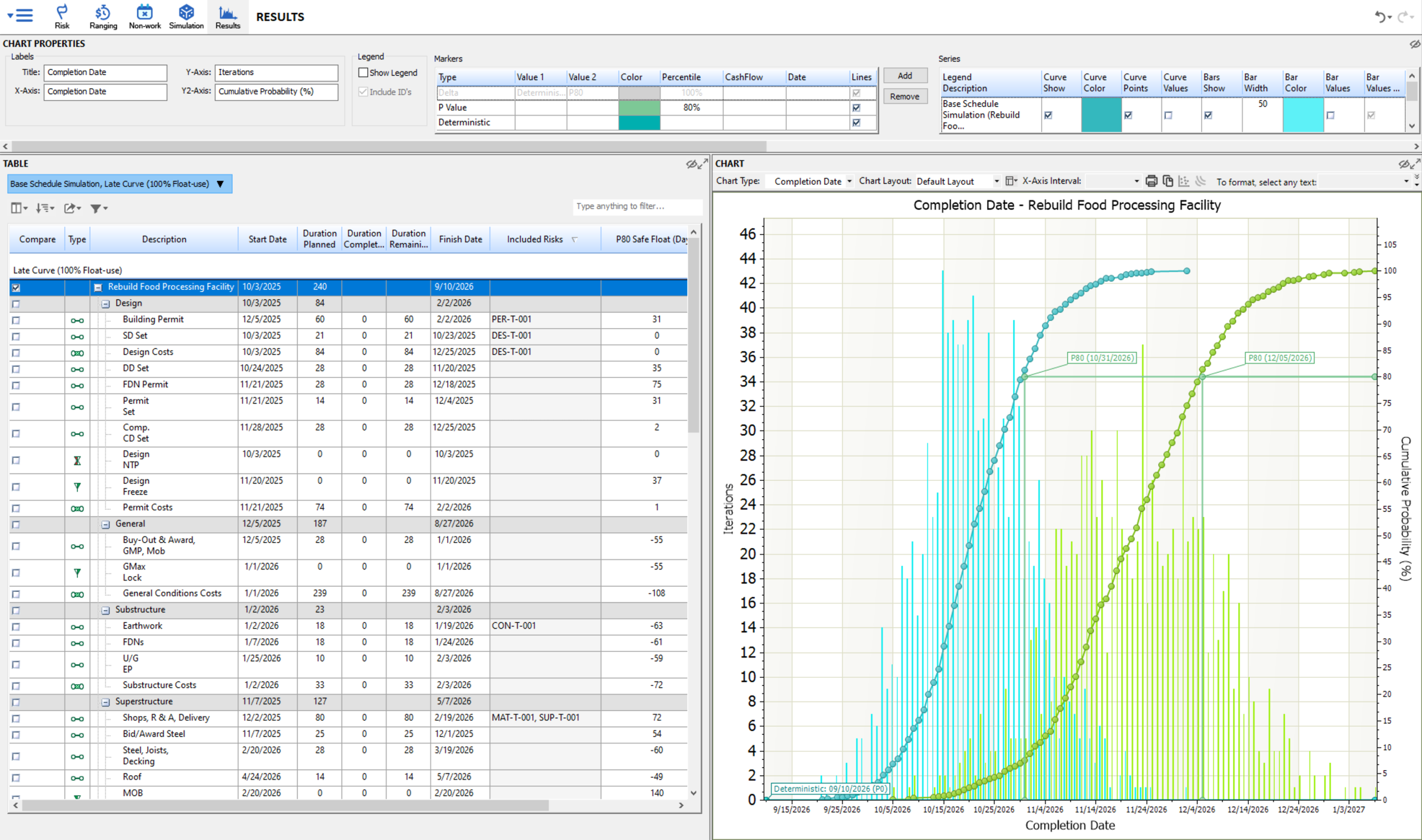
Advanced Tools Without Compromise
Risk specialists need tools that reflect how projects actually perform. NetRisk integrates qualitative and quantitative analysis, models float behavior, and produces probabilistic forecasts that support credible, defensible recommendations—not just documentation.
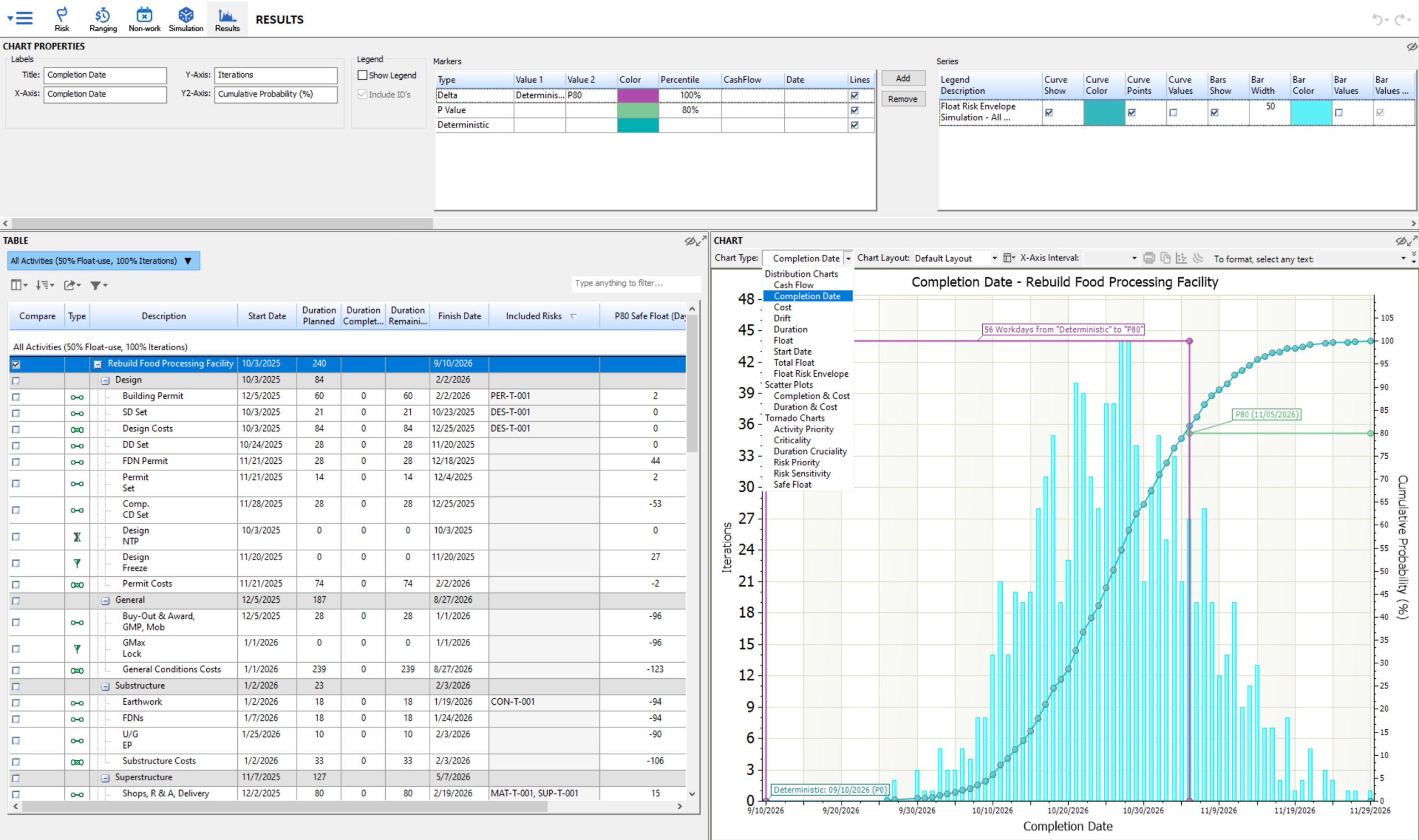
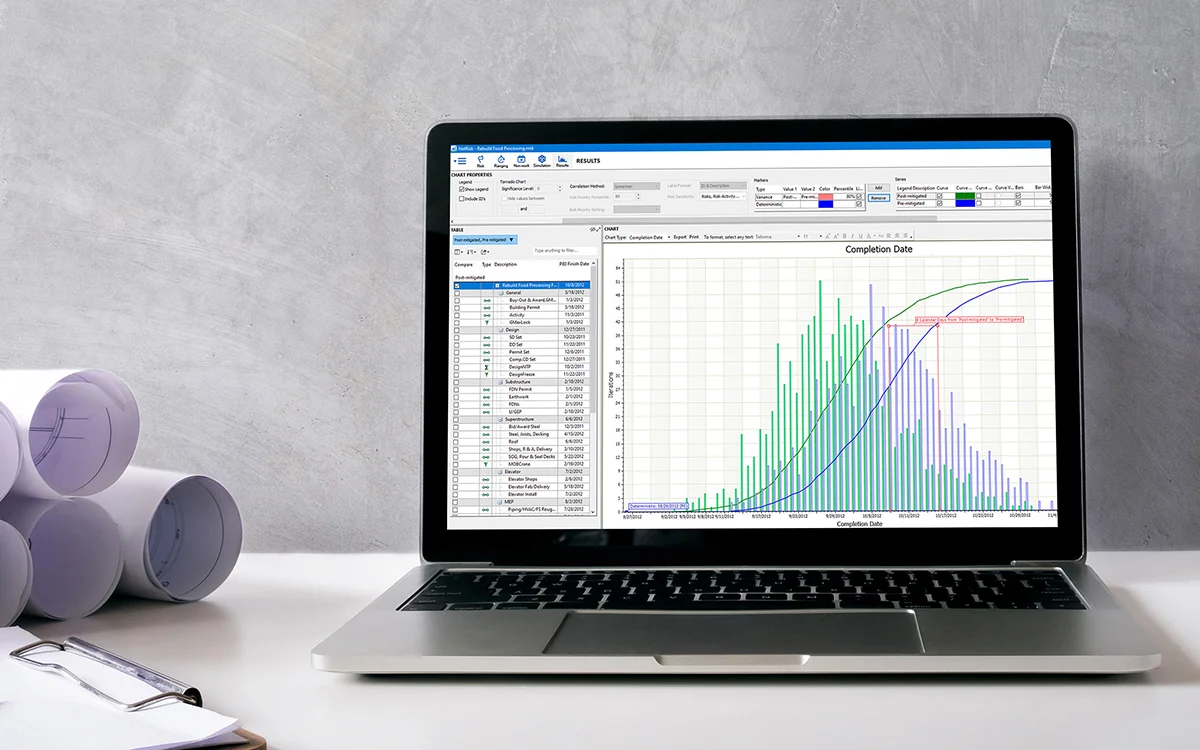
Turning Risk into Actionable Insight
Project risk management is not just about identifying uncertainty—it is about understanding how that uncertainty affects real outcomes for your program. Cost and schedule risks influence contingency, forecasting, and capital decisions, and they must be evaluated in the context of how projects actually perform.
PMA delivers NetRisk as an integrated risk management service that:
- Improves decision-making clarity for owners and program leadership
- Enhances communication across project stakeholders and governance bodies
- Aligns strategic capital objectives with execution reality
- Reduces the likelihood of unexpected cost overruns and schedule failures
The combination of NetRisk’s analytical rigor and PMA’s construction expertise produces risk intelligence that teams can understand, communicate, and act on.
Frequently Asked Questions
When during the lifecycle of a project is the best time to identify potential risks?
What role does NetRisk play in communicating potential problems to stakeholders?
Can NetRisk help develop contingency plans?
What’s the difference between positive and negative risks?
How is NetRisk different from other risk management tools?
NetRisk is the only tool that allows float use to be modeled during simulation, risk drivers with variable likelihoods, and multiple mitigation scenarios to be directly modeled in the risk register. A dialog-box-free interface makes it easy to learn and navigate, while tables make data entry quick and familiar. Automatic software updates, hands-on customer support, and an affordable price make NetRisk stand out from other tools.