Project Controls Expo
October 5–7, 2026
Nationals Park, Washington, DC
The Project Controls Expo brings together all stakeholders in the project delivery sector with the objective of advancing and developing project controls. The event is supported by thousands of major corporations and professionals, along with hundreds of expert speakers who create a significant impact on the global project controls community.
PMA looks forward to returning to Project Controls Expo USA to share our latest project controls innovations through presentations and conversations with attendees. Visit us at booth 40 to meet our team, learn more about our work, and exchange ideas about the evolving project controls landscape.
Presentations
Criticality and Concurrency Theorems
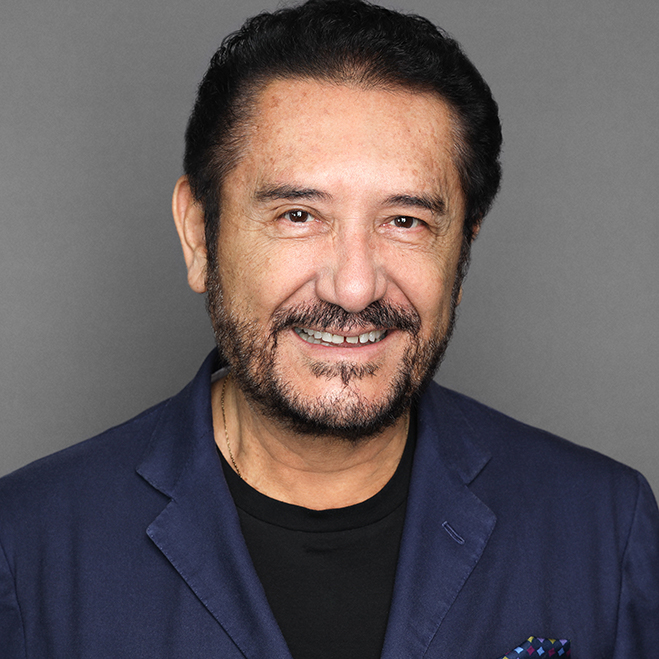 Presented by Dr. Gui Ponce de Leon, PhD, PE, PMP – CEO Emeritus, Founder, PMA Consultants
When developed, CPM focused on prospectively sourced, predictive, un-progressed schedules and not on delay analysis. This focus requires delay analysts to adapt CPM’s original criticality theories to retrospectively sourced schedules, a task made challenging by the lack of CPM calculations in the as-built window of an update (i.e., left of the data date). A common workaround has analysts sourcing superseded, predictive schedules for retrospective causal modeling while applying a prospective view of criticality even in retrospective causal modeling. The Integrated Delay Theory (IDT) opposes this oversimplification: its criticality theorems explain that what counts as the critical path, and whether two or more independent delays concurrently impact completion, depend on whether the schedule is prospectively or retrospectively sourced.
Project Closeout Is Critical to Project Controls
Presented by:
Parimal Dharmadhikari, Director, PMA Consultants;
Saumil Maniar, PE, PMP, Senior Director, PMA Consultants;
Vishwambhara Kumbharathi, Senior Manager Project Controls, Amtrak; and
Camille Silverman, Senior Program Manager, Amtrak
Project closeout on major construction projects represents a critical, but undervalued, phase in the project lifecycle. For large organizations managing significant project portfolios, a dedicated closeout process is essential to institutional knowledge retention, portfolio-level performance analysis, and the cost, schedule, and risk functions of current and future projects.. This presentation examines project closeout as a core project controls function, drawing on the co-authors’ recent experience managing capital projects for multiple owners and relating industry experience with AACE International Recommended Practices RP 10S-90 and RP 68R-11.
The presenters explore how structured closeout deliverables can drive meaningful project controls outcomes for owners, consultants, and other stakeholders. They examine how closeout work products that span final reporting documents, project team inputs, post-project analyses, and documented lessons learned can support development of accurate historical cost and schedule databases, reliable benchmarking tools for future scope definition, and stronger estimating and planning frameworks. The presentation also identifies common gaps in current closeout practice and proposes approaches to address them, arguing that effective project closeout, supported by consistent monitoring and structured data capture, can transform raw project data into useable organizational intelligence and raise performance and controls baselines.